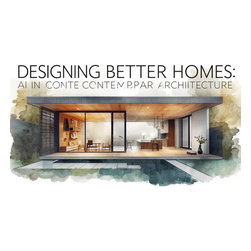


Designing Better Homes: AI in Contemporary Architecture
As cities grow denser and lifestyles continue to change, residential architecture is facing new expectations. Homes today need to be smarter, more flexible, and more closely connected to how people actually live.
AI is becoming a valuable support in this process. By helping designers explore ideas faster, visualize spaces more clearly, and improve decision-making, it opens new possibilities for creating more human-centered and future-ready living environments.
Rethinking Home Design in the Age of Dense Cities and Evolving Lifestyles
Urbanization has reshaped the way people live, socialize, and experience domestic space. In many cities, residential footprints are shrinking while expectations for comfort, adaptability, and spatial quality are only increasing. Homes today function as workplaces, social environments, personal retreats, and reflections of identity—all within limited spatial boundaries. This reality requires architects to rethink how space is planned, used, and emotionally experienced.
The Modern Challenge: Limited Space, Higher Expectations
In many metropolitan regions, residential units are shrinking while expectations continue to expand. People want homes that feel comfortable, adaptive, and future-ready. The traditional approach of static layout design often struggles to meet these evolving expectations. How can architecture respond when square meters are fixed but lifestyle demands are fluid?
The answer lies in more intelligent planning. Every wall, doorway, corridor, and transition must serve a purpose. Good residential architecture today is no longer just about form; it is fundamentally about optimizing life within constraints.
Home Design Beyond Drawings: Understanding How People Truly Live
Floor plans have always been the foundation of architectural thinking, but in contemporary design they must be understood as experiential blueprints rather than technical diagrams. Circulation, spatial rhythm, visual continuity, natural light, and emotional comfort all shape how people experience their homes daily.
Design decisions made at early planning stages determine whether a space feels confined or open, chaotic or calm. This makes early visualization incredibly important—not just for communication, but for improving the final quality of life within the home.
Why Early Home Design Visualization Helps Create Better Living Spaces
This is where digital and AI-powered design tools are redefining workflows. Instead of relying purely on imagination or static drawings, designers and homeowners can explore multiple configurations, evaluate spatial performance, and understand how rooms truly function before committing to construction.
Seeing Beyond the Blueprint
- Users gain clarity about proportions and spatial relationships.
- Architects can present options grounded in both creativity and practicality.
Making Better Decisions Faster
- Inefficiencies can be identified early.
- Iteration becomes faster, more intelligent, and more collaborative.
Aligning Expectations
- Clients can meaningfully participate in design conversations.
- Misunderstandings are reduced, leading to smoother project progress.
How AI Tools Support Residential Architecture Instead of Replacing It
There is often a misconception that AI competes with architects. In practice, AI-powered platforms work as intelligent assistants, allowing rapid exploration while leaving conceptual thinking, contextual judgment, and design identity entirely in human hands.
These tools analyze layout possibilities, support testing of interior arrangements, and help visualize alternative living modes. For dense cities, where every decision matters, this kind of intelligence becomes especially valuable.
Designing With dehome: Bringing Everyday Living Closer to Architectural Intent
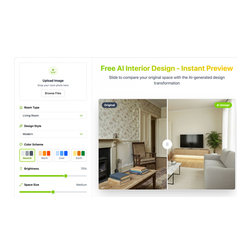
When AI becomes operational rather than theoretical, its value becomes visible. Platforms like dehome allow users to generate interior visualizations and explore furniture arrangements simply by using a floor plan. Within minutes, different configurations can be tested, helping both architects and homeowners understand space performance intuitively.
Dehome leverages cutting-edge AI technology to rapidly transform early plans into practical, ready-to-execute home design solutions.
With DeHome, you can:
- Upload your space photos or start from scratch
- Select room type, style preferences, and desired features
- Maximizes both aesthetics and functionality
AI as Support, Not Replacement
There is a misconception that AI competes with architectural expertise. In reality, it functions as an intelligent assistant—allowing rapid exploration while architects maintain creative identity, contextual understanding, and critical judgment. Routine tasks become more efficient, leaving more time for narrative, materiality, cultural relevance, sustainability, and human experience—the true essence of architectural practice.
Toward Smarter, More Human-Centered Home Design Environments
Thoughtful planning contributes directly to sustainability. When layouts are functional from the beginning, fewer late-stage corrections are needed, reducing waste and unnecessary cost. More importantly, well-designed homes stay relevant longer, adapting as lifestyles evolve.
Tools such as home design demonstrate how early spatial exploration can be made accessible even to non-professionals, encouraging meaningful participation in design processes and supporting more inclusive and collaborative residential environments.
Home Design support:
- Image-to-Image Transformation
- Text-to-Image Creation
- Diverse Design Styles
Human-centered residential design today must respond to emotion, comfort, practicality, and future resilience. Technology does not replace architectural thinking—it strengthens it, enabling spaces to better reflect how people truly live.
The Outcome: Meeting Real User Needs in a Smarter Way
Ultimately, the purpose of AI design tools, digital visualization, and evolving spatial thinking is not technological novelty—it is to serve people. Users want clarity before construction, flexibility in space, and confidence in decision-making. Architects want more effective communication, efficient iteration, and better project outcomes.
AI-supported design helps achieve all of these goals. It bridges imagination and reality, aligns expectations, and empowers both professionals and residents to create homes that are functional, emotionally resonant, and deeply responsive to the realities of modern urban living.
Project Year: 2025
Project Cost: Less than USD 1,000