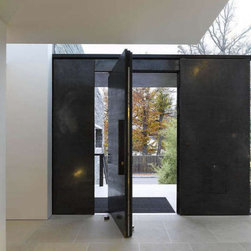


pivot doors smart solutions modern home design
Pivot Doors in Residential Architecture: When a Pivot System Solves Design Limitations
Some architectural problems don’t show up on paper. They appear when a doorway is too wide, the panel too heavy, or the circulation just doesn’t flow the way it should. This is where pivot doors stop being a visual trend and become a real architectural solution. Used correctly, they help designers solve spatial, structural, and functional challenges that traditional hinged systems struggle to manage.
Rather than asking how a door should look, pivot systems ask a more useful question: how should the space move?
Understanding the Pivot System Beyond Aesthetics
How Pivot Mechanisms Actually Work
Unlike standard hinges placed on the side of a frame, a pivot mechanism supports the door from the top and bottom. The weight transfers directly into the floor and header, reducing stress on vertical jambs. This allows for larger, heavier panels that would be impractical—or unsafe—with side hinges.
Because the pivot point is offset from the edge, the door rotates differently. This creates smoother movement and allows for controlled opening arcs, even with oversized slabs made from steel, wood, or glass.
Why Traditional Hinges Fall Short
In large residential openings, conventional hinges can sag over time. They also limit panel size and material choice. When doors become heavier, the hardware becomes the weak point. Pivot systems remove that limitation by redistributing load and reducing wear.
When Pivot Doors Solve Real Design Limitations
Oversized or Non-Standard Openings
Wide entrances are common in contemporary homes, but they introduce technical challenges. Large panels need stability, precise movement, and long-term durability. This is where pivot doors offer a clear advantage, supporting broad spans without compromising performance.
Heavy Materials and Structural Control
Steel, solid wood, and composite panels bring strength and presence, but also weight. Pivot hardware is engineered to handle these loads safely. Architects can specify bold materials without redesigning the entire entry structure—especially when working with custom wrought iron doors that combine structural strength with refined detailing in large residential entrances.
Improving Circulation and Spatial Flow
Because pivot doors don’t rely on a fixed swing from the edge, they can improve how people move through a space. Entryways feel more fluid. Transitions between exterior and interior become calmer and more intuitive, especially in homes with open layouts.
Technical Considerations Architects Must Evaluate
Pivot Placement and Clearance
The position of the pivot point affects balance, swing radius, and user experience. A center pivot creates symmetry, while an offset pivot allows for wider clear openings. Clearance planning is critical to avoid conflicts with walls, furniture, or foot traffic.
Load Capacity and Floor Conditions
Not all floors are ready to carry door loads. Concrete slabs, subfloor reinforcement, and proper anchoring are essential. Ignoring these factors can compromise performance over time.
Environmental Performance
Modern pivot systems can integrate weather sealing, insulated cores, and high-performance glass. When properly specified, they meet residential standards for air, water, and thermal control.
Why Builders and Designers Choose Specialized Fabrication
Pivot systems require precision. Fabricators experienced with steel doors and custom hardware understand tolerances, alignment, and long-term durability. Companies like Exclusive Iron Doors focus on engineered solutions, combining material strength with refined movement and reliable finishes.
This expertise ensures the door performs as intended—not just on installation day, but years later.
A Functional Choice, Not a Design Shortcut
Used thoughtfully, pivot doors are not decorative shortcuts. They are tools that help architects and homeowners resolve complex entry conditions while preserving design intent. When size, weight, and flow push past the limits of traditional systems, pivot solutions offer clarity, control, and confidence—exactly what good architecture is meant to provide.
Some architectural problems don’t show up on paper. They appear when a doorway is too wide, the panel too heavy, or the circulation just doesn’t flow the way it should. This is where pivot doors stop being a visual trend and become a real architectural solution. Used correctly, they help designers solve spatial, structural, and functional challenges that traditional hinged systems struggle to manage.
Rather than asking how a door should look, pivot systems ask a more useful question: how should the space move?
Understanding the Pivot System Beyond Aesthetics
How Pivot Mechanisms Actually Work
Unlike standard hinges placed on the side of a frame, a pivot mechanism supports the door from the top and bottom. The weight transfers directly into the floor and header, reducing stress on vertical jambs. This allows for larger, heavier panels that would be impractical—or unsafe—with side hinges.
Because the pivot point is offset from the edge, the door rotates differently. This creates smoother movement and allows for controlled opening arcs, even with oversized slabs made from steel, wood, or glass.
Why Traditional Hinges Fall Short
In large residential openings, conventional hinges can sag over time. They also limit panel size and material choice. When doors become heavier, the hardware becomes the weak point. Pivot systems remove that limitation by redistributing load and reducing wear.
When Pivot Doors Solve Real Design Limitations
Oversized or Non-Standard Openings
Wide entrances are common in contemporary homes, but they introduce technical challenges. Large panels need stability, precise movement, and long-term durability. This is where pivot doors offer a clear advantage, supporting broad spans without compromising performance.
Heavy Materials and Structural Control
Steel, solid wood, and composite panels bring strength and presence, but also weight. Pivot hardware is engineered to handle these loads safely. Architects can specify bold materials without redesigning the entire entry structure—especially when working with custom wrought iron doors that combine structural strength with refined detailing in large residential entrances.
Improving Circulation and Spatial Flow
Because pivot doors don’t rely on a fixed swing from the edge, they can improve how people move through a space. Entryways feel more fluid. Transitions between exterior and interior become calmer and more intuitive, especially in homes with open layouts.
Technical Considerations Architects Must Evaluate
Pivot Placement and Clearance
The position of the pivot point affects balance, swing radius, and user experience. A center pivot creates symmetry, while an offset pivot allows for wider clear openings. Clearance planning is critical to avoid conflicts with walls, furniture, or foot traffic.
Load Capacity and Floor Conditions
Not all floors are ready to carry door loads. Concrete slabs, subfloor reinforcement, and proper anchoring are essential. Ignoring these factors can compromise performance over time.
Environmental Performance
Modern pivot systems can integrate weather sealing, insulated cores, and high-performance glass. When properly specified, they meet residential standards for air, water, and thermal control.
Why Builders and Designers Choose Specialized Fabrication
Pivot systems require precision. Fabricators experienced with steel doors and custom hardware understand tolerances, alignment, and long-term durability. Companies like Exclusive Iron Doors focus on engineered solutions, combining material strength with refined movement and reliable finishes.
This expertise ensures the door performs as intended—not just on installation day, but years later.
A Functional Choice, Not a Design Shortcut
Used thoughtfully, pivot doors are not decorative shortcuts. They are tools that help architects and homeowners resolve complex entry conditions while preserving design intent. When size, weight, and flow push past the limits of traditional systems, pivot solutions offer clarity, control, and confidence—exactly what good architecture is meant to provide.
Project Year: 2026
Project Cost: Less than USD 1,000