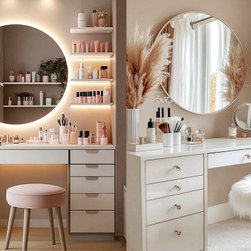


How to Design a Dressing Table Setup That Looks Professionally Styled
A dressing table can either feel like a dumping ground…
or one of the most elegant corners in a bedroom.
The difference isn’t money.
It’s proportion, lighting, and restraint.
Here’s how interior designers approach dressing table spaces — and how you can apply the same principles.
1. Get the Mirror Scale Right (This Is Where Most People Go Wrong)
The mirror should visually anchor the table.
As a rule:
If the mirror is too small, the entire setup feels temporary.
If it’s too large, it dominates the wall and loses balance.
Illuminated dressing table mirrors are popular because they remove shadow inconsistencies. Integrated LED lighting gives you even light across both sides of the face — something overhead bedroom lighting rarely achieves.
Many homeowners looking for purpose-built illuminated designs explore brands such as Hollywood Mirrors, where the proportions are specifically designed for dressing table layouts rather than adapted bathroom mirrors.
The key is symmetry and balance.
2. Position the Table With Intention
Placement affects everything.
The best positions are:
If space allows, positioning the table slightly off-centre on the wall can feel more relaxed than rigid symmetry.
Mirrors double perceived space. Use that strategically.
3. Understand Light Temperature
Not all lighting flatters.
For dressing tables, aim for:
Cool white light (4000K+) feels clinical and harsh in bedrooms.
Integrated LED dressing table mirrors allow brightness adjustment depending on time of day — softer in the evening, brighter in the morning.
That flexibility makes a noticeable difference in daily use.
4. Keep Styling Structured
Professional stylists rarely overcrowd surfaces.
They use grouping.
For example:
Everything else is stored.
The surface should have intention, not accumulation.
5. Choose Materials That Reflect the Room
The mirror frame should relate to something else in the room:
When finishes repeat subtly, the space feels cohesive.
This is often what separates a styled room from an unfinished one.
6. Think Beyond Makeup
A dressing table isn’t just for cosmetics.
It can function as:
Choosing a well-built mirror with stable positioning and consistent lighting makes it multi-functional rather than decorative only.
7. Avoid Common Mistakes
These instantly reduce impact:
The most elegant setups are restrained.
Final Thoughts
A dressing table mirror should feel intentional — not like an afterthought.
When the scale is right, the lighting is warm, and the styling is structured, the entire bedroom benefits.
It becomes more than furniture.
It becomes a space you actually enjoy using.
or one of the most elegant corners in a bedroom.
The difference isn’t money.
It’s proportion, lighting, and restraint.
Here’s how interior designers approach dressing table spaces — and how you can apply the same principles.
1. Get the Mirror Scale Right (This Is Where Most People Go Wrong)
The mirror should visually anchor the table.
As a rule:
- Mirror width = at least two-thirds of table width
• Leave 5–10cm breathing room either side
• Height should allow a full seated reflection
If the mirror is too small, the entire setup feels temporary.
If it’s too large, it dominates the wall and loses balance.
Illuminated dressing table mirrors are popular because they remove shadow inconsistencies. Integrated LED lighting gives you even light across both sides of the face — something overhead bedroom lighting rarely achieves.
Many homeowners looking for purpose-built illuminated designs explore brands such as Hollywood Mirrors, where the proportions are specifically designed for dressing table layouts rather than adapted bathroom mirrors.
The key is symmetry and balance.
2. Position the Table With Intention
Placement affects everything.
The best positions are:
- Near natural light but not directly blocking a window
• Against a clean wall (avoid patterned wallpaper behind illuminated mirrors)
• Away from main walking routes
If space allows, positioning the table slightly off-centre on the wall can feel more relaxed than rigid symmetry.
Mirrors double perceived space. Use that strategically.
3. Understand Light Temperature
Not all lighting flatters.
For dressing tables, aim for:
- 2700K–3000K warm white
• Even distribution on both sides
• Dimmable control
Cool white light (4000K+) feels clinical and harsh in bedrooms.
Integrated LED dressing table mirrors allow brightness adjustment depending on time of day — softer in the evening, brighter in the morning.
That flexibility makes a noticeable difference in daily use.
4. Keep Styling Structured
Professional stylists rarely overcrowd surfaces.
They use grouping.
For example:
- A tray containing 2–3 items
• One vertical element (such as a framed print)
• One softer element (candle, plant, or fabric)
Everything else is stored.
The surface should have intention, not accumulation.
5. Choose Materials That Reflect the Room
The mirror frame should relate to something else in the room:
- Black frame → ties into window frames or bed hardware
• Gold frame → echoes light fittings
• White frame → blends into neutral walls
When finishes repeat subtly, the space feels cohesive.
This is often what separates a styled room from an unfinished one.
6. Think Beyond Makeup
A dressing table isn’t just for cosmetics.
It can function as:
- A jewellery station
• A skincare area
• A small writing desk
• A calm morning ritual space
Choosing a well-built mirror with stable positioning and consistent lighting makes it multi-functional rather than decorative only.
7. Avoid Common Mistakes
These instantly reduce impact:
- Tiny mirrors on wide tables
• Cold blue lighting
• Overcrowded surfaces
• Mismatched frame finishes
• Bulky stools that don’t tuck away
The most elegant setups are restrained.
Final Thoughts
A dressing table mirror should feel intentional — not like an afterthought.
When the scale is right, the lighting is warm, and the styling is structured, the entire bedroom benefits.
It becomes more than furniture.
It becomes a space you actually enjoy using.
Project Year: 2026
Project Cost: Less than USD 1,000