

How to choose lighting for a business space: LED, efficiency, and budget
Lighting is rarely the first item on a business checklist. Rent, staffing, equipment, branding - all of these seem more urgent. Yet lighting quietly shapes how clients perceive a space and how employees perform within it. It influences mood, productivity, safety, and even energy bills. Choosing the right lighting for a business space is not just about brightness; it is about strategy.
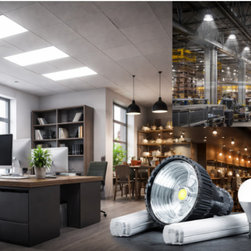
The starting point is function. A warehouse, a boutique hotel lobby, a medical office, and a co-working hub all demand different light conditions. In industrial settings, clarity and uniform distribution matter most. In retail, contrast and accent lighting guide attention toward products. In offices, balanced illumination reduces eye strain and supports focus during long working hours.
Before comparing brands or technologies, it is worth mapping out three core questions:
These answers determine whether a simple lamp replacement is enough or whether a full LED upgrade makes financial sense.
Why LED has become the standard for business lighting
LED technology is no longer a premium alternative. It has become the default choice for commercial lighting because of efficiency and durability. LEDs consume significantly less electricity than traditional incandescent or halogen lamps while offering longer service life. Fewer replacements mean lower maintenance costs, especially in spaces with high ceilings or large surface areas.
Beyond efficiency, LED lighting provides flexibility. Color temperature can be tailored - cooler tones for concentration in offices or laboratories, warmer tones for hospitality and customer-facing environments. Dimmable systems and smart controls allow businesses to adjust light levels during different parts of the day, reducing unnecessary consumption.
When calculating budget impact, the purchase price of fixtures should not be the only metric. Total cost of ownership includes installation, electricity usage over time, and maintenance. An LED solution with a slightly higher upfront cost often proves more economical within one or two years of operation.
The budget question: short-term savings or long-term value?
Many business owners hesitate at the initial investment required for a lighting upgrade. Yet budget decisions in this area are less about cost and more about return.
Energy-efficient lighting can reduce electricity bills by a noticeable margin. In facilities operating 10-14 hours daily, even a small reduction per fixture adds up across dozens or hundreds of units. Maintenance budgets shrink when lamps last longer. Productivity gains, though harder to quantify, may also contribute to overall performance.
When sourcing equipment, working with established B2B suppliers helps ensure consistency and compliance with safety standards. Platforms such as Bank of Lamps provide structured access to a wide range of commercial lighting solutions, enabling businesses to compare specifications and select options suited to their operational needs. The value lies not only in product availability but in the ability to plan lighting as a coordinated system rather than isolated purchases.
Trends in industrial and commercial lighting in 2026
The coming year brings several shifts in how companies approach illumination.
Energy transparency is gaining attention. Businesses want precise data on consumption and carbon footprint. Smart lighting systems equipped with sensors and automation tools support this goal by adapting brightness based on occupancy or daylight levels.
Modular design is another development. Instead of replacing entire fixtures, companies increasingly opt for components that can be upgraded individually. This approach extends system lifespan and reduces waste.
Industrial facilities are also prioritizing resilience. Lighting systems are expected to perform reliably under demanding conditions, including temperature fluctuations and dust exposure. Durability standards and certifications carry more weight in procurement decisions.
In retail and hospitality sectors, lighting is used strategically to shape customer behavior. Adjustable LED solutions make it possible to highlight products, create zones within a space, and refresh the atmosphere without structural renovation.
Across these sectors, efficiency remains central. Businesses want measurable performance - lumen output, wattage, lifespan - presented clearly and transparently.
Matching lighting to different business environments
A manufacturing floor requires high-intensity, evenly distributed illumination to prevent accidents and support precision tasks. Glare control is essential. Warehouses benefit from high-bay LED fixtures that combine brightness with low energy consumption.
Office spaces demand a balance between overhead lighting and task lighting. Excessively bright white light can cause fatigue, while insufficient light reduces concentration. Modern LED panels with adjustable color temperature offer flexibility throughout the workday.
Retail stores rely on layered lighting. Ambient light ensures comfort, accent lighting directs attention, and display lighting enhances product appeal. Here, reliability and color rendering index matter, as accurate color perception influences purchasing decisions.
Hospitality environments prioritize comfort. Soft transitions between light zones and warm tones create a welcoming atmosphere. Dimmable LED systems allow managers to adapt lighting to different times of day or special events.
Within these contexts, brands known for consistent quality often become part of procurement strategies. In the midsection of many commercial projects, product lines such as Bellight are considered for their range of LED lamps that combine energy efficiency with practical design. Selection is driven by specifications rather than brand image, yet dependable manufacturing standards remain an asset.
Efficiency without compromise
Choosing efficient lighting does not mean sacrificing performance. Modern LED systems provide strong luminous output while maintaining stable color quality over time. Flicker-free operation supports comfort in offices and reduces strain during long shifts.
Businesses increasingly integrate lighting controls with building management systems. Motion sensors, daylight sensors, and programmable schedules ensure lights operate only when needed. Such measures align operational efficiency with environmental responsibility.
A well-designed lighting plan also anticipates growth. Expanding office teams or reconfigured retail layouts should not require complete replacement of fixtures. Flexible mounting systems and scalable LED arrays simplify adaptation.
Later in the procurement cycle, decision-makers may again evaluate product lines like Bellight to maintain uniformity across multiple facilities or branches. Consistency in lighting temperature and output strengthens brand identity within physical spaces, even when customers do not consciously notice it.
A practical approach to selection
Choosing lighting for a business space works best as a structured process:
Lighting is infrastructure. It supports daily operations in ways that often go unnoticed until something fails. When chosen thoughtfully, it reduces costs, enhances productivity, and strengthens the overall environment in which business takes place.
Investing time in proper selection pays off quietly - through lower bills, fewer replacements, and spaces that feel purposeful and efficient. In commercial settings, light is not decoration; it is performance.
The starting point is function. A warehouse, a boutique hotel lobby, a medical office, and a co-working hub all demand different light conditions. In industrial settings, clarity and uniform distribution matter most. In retail, contrast and accent lighting guide attention toward products. In offices, balanced illumination reduces eye strain and supports focus during long working hours.
Before comparing brands or technologies, it is worth mapping out three core questions:
- What tasks are performed in the space?
- How many hours per day will the lights operate?
- What energy costs are acceptable within the annual budget?
These answers determine whether a simple lamp replacement is enough or whether a full LED upgrade makes financial sense.
Why LED has become the standard for business lighting
LED technology is no longer a premium alternative. It has become the default choice for commercial lighting because of efficiency and durability. LEDs consume significantly less electricity than traditional incandescent or halogen lamps while offering longer service life. Fewer replacements mean lower maintenance costs, especially in spaces with high ceilings or large surface areas.
Beyond efficiency, LED lighting provides flexibility. Color temperature can be tailored - cooler tones for concentration in offices or laboratories, warmer tones for hospitality and customer-facing environments. Dimmable systems and smart controls allow businesses to adjust light levels during different parts of the day, reducing unnecessary consumption.
When calculating budget impact, the purchase price of fixtures should not be the only metric. Total cost of ownership includes installation, electricity usage over time, and maintenance. An LED solution with a slightly higher upfront cost often proves more economical within one or two years of operation.
The budget question: short-term savings or long-term value?
Many business owners hesitate at the initial investment required for a lighting upgrade. Yet budget decisions in this area are less about cost and more about return.
Energy-efficient lighting can reduce electricity bills by a noticeable margin. In facilities operating 10-14 hours daily, even a small reduction per fixture adds up across dozens or hundreds of units. Maintenance budgets shrink when lamps last longer. Productivity gains, though harder to quantify, may also contribute to overall performance.
When sourcing equipment, working with established B2B suppliers helps ensure consistency and compliance with safety standards. Platforms such as Bank of Lamps provide structured access to a wide range of commercial lighting solutions, enabling businesses to compare specifications and select options suited to their operational needs. The value lies not only in product availability but in the ability to plan lighting as a coordinated system rather than isolated purchases.
Trends in industrial and commercial lighting in 2026
The coming year brings several shifts in how companies approach illumination.
Energy transparency is gaining attention. Businesses want precise data on consumption and carbon footprint. Smart lighting systems equipped with sensors and automation tools support this goal by adapting brightness based on occupancy or daylight levels.
Modular design is another development. Instead of replacing entire fixtures, companies increasingly opt for components that can be upgraded individually. This approach extends system lifespan and reduces waste.
Industrial facilities are also prioritizing resilience. Lighting systems are expected to perform reliably under demanding conditions, including temperature fluctuations and dust exposure. Durability standards and certifications carry more weight in procurement decisions.
In retail and hospitality sectors, lighting is used strategically to shape customer behavior. Adjustable LED solutions make it possible to highlight products, create zones within a space, and refresh the atmosphere without structural renovation.
Across these sectors, efficiency remains central. Businesses want measurable performance - lumen output, wattage, lifespan - presented clearly and transparently.
Matching lighting to different business environments
A manufacturing floor requires high-intensity, evenly distributed illumination to prevent accidents and support precision tasks. Glare control is essential. Warehouses benefit from high-bay LED fixtures that combine brightness with low energy consumption.
Office spaces demand a balance between overhead lighting and task lighting. Excessively bright white light can cause fatigue, while insufficient light reduces concentration. Modern LED panels with adjustable color temperature offer flexibility throughout the workday.
Retail stores rely on layered lighting. Ambient light ensures comfort, accent lighting directs attention, and display lighting enhances product appeal. Here, reliability and color rendering index matter, as accurate color perception influences purchasing decisions.
Hospitality environments prioritize comfort. Soft transitions between light zones and warm tones create a welcoming atmosphere. Dimmable LED systems allow managers to adapt lighting to different times of day or special events.
Within these contexts, brands known for consistent quality often become part of procurement strategies. In the midsection of many commercial projects, product lines such as Bellight are considered for their range of LED lamps that combine energy efficiency with practical design. Selection is driven by specifications rather than brand image, yet dependable manufacturing standards remain an asset.
Efficiency without compromise
Choosing efficient lighting does not mean sacrificing performance. Modern LED systems provide strong luminous output while maintaining stable color quality over time. Flicker-free operation supports comfort in offices and reduces strain during long shifts.
Businesses increasingly integrate lighting controls with building management systems. Motion sensors, daylight sensors, and programmable schedules ensure lights operate only when needed. Such measures align operational efficiency with environmental responsibility.
A well-designed lighting plan also anticipates growth. Expanding office teams or reconfigured retail layouts should not require complete replacement of fixtures. Flexible mounting systems and scalable LED arrays simplify adaptation.
Later in the procurement cycle, decision-makers may again evaluate product lines like Bellight to maintain uniformity across multiple facilities or branches. Consistency in lighting temperature and output strengthens brand identity within physical spaces, even when customers do not consciously notice it.
A practical approach to selection
Choosing lighting for a business space works best as a structured process:
- Assess functional needs and compliance requirements.
- Calculate energy usage projections under different scenarios.
- Compare total ownership costs over several years.
- Prioritize certified, durable components.
- Plan for scalability and smart integration.
Lighting is infrastructure. It supports daily operations in ways that often go unnoticed until something fails. When chosen thoughtfully, it reduces costs, enhances productivity, and strengthens the overall environment in which business takes place.
Investing time in proper selection pays off quietly - through lower bills, fewer replacements, and spaces that feel purposeful and efficient. In commercial settings, light is not decoration; it is performance.