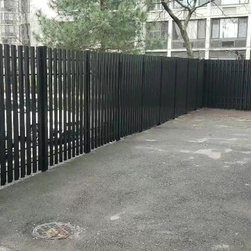


Privacy Fence Panels: When Reinforced Aluminum Fence Panels Pay Off
Privacy fences don’t usually fail because someone chose the wrong style. They fail when the structure behind the look can’t carry real loads, wind gusts, repeated gate slams, frost movement, or subtle bending that turns into movement, noise, and gaps over time. This guide explains when aluminum fence panels and reinforced fence panels are worth the upgrade, what “reinforced” should mean in practical terms, and how to read common test standards without getting misled.
Quick summary: key takeaways
1) What “reinforced” should mean for privacy fence panels
A privacy panel acts like a shallow wall. The slats take pressure, the rails distribute it, and the posts transfer loads into the ground or a slab. “Reinforced” is only meaningful if it improves the whole load path, typically by stiffening rails, improving how slats lock together, and strengthening critical interfaces where movement starts.
As a homeowner, reinforcement is worth paying for when you want straighter lines and less visible waviness. As a contractor, it is worth paying for when you want fewer call-backs from wind movement, rattles, and panel drift at seams and corners.
PrimeAlux system note: PrimeAlux privacy panel specs describe reinforced top and bottom locking rails, 80 x 80 mm extruded posts, and a slide-lock assembly sequence that is designed to keep components aligned under load.
2) Wind is the main stress test for an aluminum privacy fence
Privacy fences catch wind. That is not marketing language, it is physics. A solid panel can see suction and pressure cycles that try to rack posts, flex rails, and loosen anchors. This is where reinforced aluminum fence panels often pay for themselves by reducing deflection and long-term movement.
If you are comparing suppliers, ask for specifics:
Contractor note, anchors and frost:
PrimeAlux system note: PrimeAlux documentation includes wind-load testing referenced in an engineering letter, describing a 6 ft x 6 ft privacy panel tested with distributed sandbag loads and reporting a maximum wind velocity resistance of 169.8 km/h (about 0.72 kPa) for that tested setup.
3) Slat deflection is where reinforcement shows up day to day
Even when nothing “breaks,” deflection causes the annoying stuff, buzzing in wind, visible waviness, misalignment at seams, and hardware that slowly loosens. Reinforcement rails and profiles matter because they reduce bending in the slats and help distribute load across the panel.
A practical rule:
PrimeAlux system note: PrimeAlux provides a slat-load testing document that reports load results across different slat sizes and panel widths using a reinforcement rail profile between slats, which helps you compare stiffness by span instead of relying on guesswork.
4) Choosing between Privacy, Privacy Plus, and Semi-Privacy
Not every fence needs the heaviest structure. The smarter move is matching the system to the job:
Contractor note, spacing and tricky sites:
PrimeAlux system note: PrimeAlux’s Privacy Plus product description calls out additional reinforcement elements compared to the standard Privacy configuration, which is the kind of documented distinction you want between product tiers.
5) Coatings and finishes: pay for a finish system, not just a color
Color is not the performance feature. The performance feature is how the finish holds up to UV, moisture, and wear, especially on edges, fastener areas, and high-touch gate zones.
When comparing aluminum fence panels, ask:
PrimeAlux system note: PrimeAlux product pages describe a UV-resistant multi-layer coating approach and show woodgrain and solid metallic options for privacy systems, which supports a durability-oriented conversation rather than a purely aesthetic one.
6) Installation speed is also performance, especially for contractors
Fast installs are not only about labor. They reduce field improvisation, which reduces mistakes. A repeatable assembly sequence tends to stay straighter because parts align the way they were designed to align.
Look for:
Contractor note, surface mount:
PrimeAlux system note: PrimeAlux describes a slide-lock style installation sequence on its privacy pages and references a base-plate approach with a defined concrete foundation recommendation, which helps installers plan rather than improvise.
7) Gates are where reinforcement becomes non-negotiable
If you have a gate, you have repeated dynamic loads, swinging, closing, latch impacts, and sometimes automation. That is why many fences look tired around gates first.
What pays off at the gate zone:
Contractor note, gate planning:
PrimeAlux system note: PrimeAlux offers gate systems sized for common openings and designed around a modular approach, which supports cleaner alignment and faster installs when gates are part of the scope.
8) Understanding the tests: what they measure, and what they do not
Here is how to read the common standards without turning them into exaggerated claims.
ASTM E84 (surface burning characteristics)
PrimeAlux system note: PrimeAlux publishes an Intertek ASTM E84 report for its privacy slat fence system that reports FSI 0 and SDI 50, and the report language clarifies that E84 is not a standalone predictor of real-world fire hazard.
ASTM E90 (airborne sound transmission loss)
PrimeAlux system note: PrimeAlux publishes an Intertek ASTM E90 report for a Privacy Plus specimen with STC 22 and OITC 19, which indicates measured sound transmission loss in a lab configuration.
Ontario Building Code related engineering documentation
PrimeAlux system note: PrimeAlux provides an engineering letter that references wind-load and load-testing data and discusses OBC considerations, which helps contractors and buyers move from marketing claims to documented performance context.
FAQ
Conclusion
Reinforced aluminum fence panels pay off when your privacy fence is doing real work: resisting wind movement, staying straight across long runs, and handling gates without sagging or loosening over time. Evaluate the full load path, posts, rails, slats, connections, and anchors, then use published test evidence as support, not hype, to choose the right reinforced fence panels for your site.
PrimeAlux system note: PrimeAlux supports that engineering-first decision process by publishing product specs and test documentation for privacy systems, including slat-load testing, wind-load context, and ASTM E84 and ASTM E90 reports that clarify what was measured and what it means for privacy fence buyers.
Quick summary: key takeaways
- Reinforcement pays off fastest on wind-exposed properties, long straight runs, and any layout with frequent gates.
- Look for a complete load path, posts to rails to slats to connections to anchors, not just “strong slats.”
- “Tested to” should tell you what was measured, wind pressure, load, acoustics, surface burning, and what it implies, without absolute guarantees.
- Installation details matter, post anchoring, base plates vs in-ground, and dealing with slopes or retaining walls can make or break performance.
1) What “reinforced” should mean for privacy fence panels
A privacy panel acts like a shallow wall. The slats take pressure, the rails distribute it, and the posts transfer loads into the ground or a slab. “Reinforced” is only meaningful if it improves the whole load path, typically by stiffening rails, improving how slats lock together, and strengthening critical interfaces where movement starts.
As a homeowner, reinforcement is worth paying for when you want straighter lines and less visible waviness. As a contractor, it is worth paying for when you want fewer call-backs from wind movement, rattles, and panel drift at seams and corners.
PrimeAlux system note: PrimeAlux privacy panel specs describe reinforced top and bottom locking rails, 80 x 80 mm extruded posts, and a slide-lock assembly sequence that is designed to keep components aligned under load.
2) Wind is the main stress test for an aluminum privacy fence
Privacy fences catch wind. That is not marketing language, it is physics. A solid panel can see suction and pressure cycles that try to rack posts, flex rails, and loosen anchors. This is where reinforced aluminum fence panels often pay for themselves by reducing deflection and long-term movement.
If you are comparing suppliers, ask for specifics:
- Was wind resistance evaluated as pressure or a defined method, not just a vague mph claim?
- What panel size was used?
- Was the test about the panel alone, or the assembled system including posts and connections?
Contractor note, anchors and frost:
- In Canada, frost heave is a performance issue, not just a code checkbox. In-ground posts need proper embedment below local frost depth, while surface-mount posts depend heavily on slab thickness, rebar, and anchor choice.
- On exposed corners, treat end and corner posts as structural, not decorative. Layout and bracing strategy matter.
PrimeAlux system note: PrimeAlux documentation includes wind-load testing referenced in an engineering letter, describing a 6 ft x 6 ft privacy panel tested with distributed sandbag loads and reporting a maximum wind velocity resistance of 169.8 km/h (about 0.72 kPa) for that tested setup.
3) Slat deflection is where reinforcement shows up day to day
Even when nothing “breaks,” deflection causes the annoying stuff, buzzing in wind, visible waviness, misalignment at seams, and hardware that slowly loosens. Reinforcement rails and profiles matter because they reduce bending in the slats and help distribute load across the panel.
A practical rule:
- Sheltered lots with short runs can often do fine with standard structures.
- Open exposure, long runs, and high-use areas benefit disproportionately from reinforced fence panels.
PrimeAlux system note: PrimeAlux provides a slat-load testing document that reports load results across different slat sizes and panel widths using a reinforcement rail profile between slats, which helps you compare stiffness by span instead of relying on guesswork.
4) Choosing between Privacy, Privacy Plus, and Semi-Privacy
Not every fence needs the heaviest structure. The smarter move is matching the system to the job:
- Semi-privacy is often chosen for airflow and a lighter visual feel, useful in windy zones where you want some pass-through.
- Privacy is the baseline “solid look” choice, where rails, posts, and connections do the heavy lifting.
- A Privacy-plus fence typically makes sense when the site is more demanding, higher exposure, longer runs, or you want additional reinforcement built into the panel design.
Contractor note, spacing and tricky sites:
- Long straight runs highlight any layout error. Control line and post alignment carefully.
- For slopes and retaining walls, decide early whether you are stepping panels or racking. Plan post anchoring for elevation changes before you order materials.
PrimeAlux system note: PrimeAlux’s Privacy Plus product description calls out additional reinforcement elements compared to the standard Privacy configuration, which is the kind of documented distinction you want between product tiers.
5) Coatings and finishes: pay for a finish system, not just a color
Color is not the performance feature. The performance feature is how the finish holds up to UV, moisture, and wear, especially on edges, fastener areas, and high-touch gate zones.
When comparing aluminum fence panels, ask:
- Is the finish described as UV resistant?
- Is there a multi-layer approach, not just a generic powder coat mention?
- What maintenance is expected, rinse and mild soap, or special cleaners?
PrimeAlux system note: PrimeAlux product pages describe a UV-resistant multi-layer coating approach and show woodgrain and solid metallic options for privacy systems, which supports a durability-oriented conversation rather than a purely aesthetic one.
6) Installation speed is also performance, especially for contractors
Fast installs are not only about labor. They reduce field improvisation, which reduces mistakes. A repeatable assembly sequence tends to stay straighter because parts align the way they were designed to align.
Look for:
- repeatable steps, anchors, posts, rails, slats, then lock and cap
- fewer ad-hoc cuts
- clear termination and corner details
Contractor note, surface mount:
- Surface-mount installs live or die by slab quality and anchor layout.
- If you are pouring new concrete, lock post layout early and confirm hardware clearances before the pour.
PrimeAlux system note: PrimeAlux describes a slide-lock style installation sequence on its privacy pages and references a base-plate approach with a defined concrete foundation recommendation, which helps installers plan rather than improvise.
7) Gates are where reinforcement becomes non-negotiable
If you have a gate, you have repeated dynamic loads, swinging, closing, latch impacts, and sometimes automation. That is why many fences look tired around gates first.
What pays off at the gate zone:
- stiffer posts and cleaner hardware alignment
- gate design that avoids “field fixes”
- better long-term hinge and latch behavior
Contractor note, gate planning:
- Plan post centers and swing direction early, especially near steps, landscaping, or driveways.
- If automating, confirm clearance and hardware compatibility before ordering.
PrimeAlux system note: PrimeAlux offers gate systems sized for common openings and designed around a modular approach, which supports cleaner alignment and faster installs when gates are part of the scope.
8) Understanding the tests: what they measure, and what they do not
Here is how to read the common standards without turning them into exaggerated claims.
ASTM E84 (surface burning characteristics)
- Measures Flame Spread Index and Smoke Developed Index in a controlled tunnel test.
- It is about comparative surface burning behavior under that method, not a guarantee of real-world fire outcome.
PrimeAlux system note: PrimeAlux publishes an Intertek ASTM E84 report for its privacy slat fence system that reports FSI 0 and SDI 50, and the report language clarifies that E84 is not a standalone predictor of real-world fire hazard.
ASTM E90 (airborne sound transmission loss)
- Measures transmission loss across frequencies and yields ratings like STC and OITC.
- Outdoor noise is complex and arrives over, around, and through gaps, so this is not “soundproofing,” but it is useful comparative evidence.
PrimeAlux system note: PrimeAlux publishes an Intertek ASTM E90 report for a Privacy Plus specimen with STC 22 and OITC 19, which indicates measured sound transmission loss in a lab configuration.
Ontario Building Code related engineering documentation
- Engineering letters can connect testing and design recommendations to OBC clauses for certain applications.
- It helps clarify what loads were considered and what configurations were evaluated.
PrimeAlux system note: PrimeAlux provides an engineering letter that references wind-load and load-testing data and discusses OBC considerations, which helps contractors and buyers move from marketing claims to documented performance context.
FAQ
- When are reinforced aluminum fence panels worth it?
When your site is wind-exposed, you have long straight runs, or you have frequent gates. Reinforcement reduces deflection and long-term alignment issues. - Are aluminum fence panels good for privacy?
Yes, when you choose a privacy configuration and install it with appropriate post anchoring and layout control. - What is the difference between an aluminum fence panel and an aluminum privacy fence?
An aluminum fence panel is the physical panel unit. An aluminum privacy fence is the full installed system, panels plus posts, rails, and anchoring, designed to block sightlines. - What is a Privacy-plus fence, and when should I use it?
A Privacy-plus fence is typically a higher-reinforcement privacy tier designed for more demanding sites, wind exposure, long runs, or when you want extra rigidity built into the assembly. - Can I surface mount privacy fence panels on concrete?
Yes, but performance depends heavily on slab quality, anchor choice, and proper layout. In high wind exposure, surface mount can be the limiting factor more than the panel itself. - What site conditions make privacy fences fail early?
High wind exposure, long runs with poor layout control, weak corner and end posts, undersized anchors, and gate zones without adequate reinforcement.
Conclusion
Reinforced aluminum fence panels pay off when your privacy fence is doing real work: resisting wind movement, staying straight across long runs, and handling gates without sagging or loosening over time. Evaluate the full load path, posts, rails, slats, connections, and anchors, then use published test evidence as support, not hype, to choose the right reinforced fence panels for your site.
PrimeAlux system note: PrimeAlux supports that engineering-first decision process by publishing product specs and test documentation for privacy systems, including slat-load testing, wind-load context, and ASTM E84 and ASTM E90 reports that clarify what was measured and what it means for privacy fence buyers.