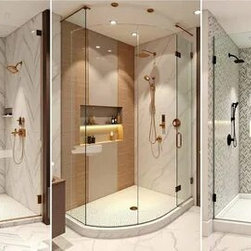


The Engineering of Minimalism: Managing Water Containment in Frameless Shower
In many high-end London residential renovations, from Chelsea to Marylebone, there is a recurring tendency to focus on visible luxury while overlooking technical essentials. It is not uncommon to see a homeowner invest significantly in bespoke brassware, yet overlook the performance of a 10mm polymer barrier.
From a consultancy perspective, this isn't merely a maintenance detail—it is a matter of protecting the building’s fabric. A bespoke stone-clad bathroom can be compromised by moisture ingress within months due to an unsuitable seal specification. True longevity in bathroom design is often determined by these discreet components that safeguard the wider investment.
1. The Specification of Invisible Barriers: Clarity and Material Stability
The primary objective of frameless design is a "discreet defense." Seals should be viewed as functional extensions of the architectural glass rather than mere add-ons.
2. Dual-Layer Protection: The Rationale for Translucent Thresholds
For enclosures equipped with high-pressure rainfall showerheads, a single vertical or bottom seal may reach its physical limit. This is where a secondary horizontal defense becomes advisable.
Labyrinth Sealing: Integrating a low-profile, translucent floor threshold creates what is known in the trade as a "labyrinth seal." By overlapping the door’s lower fin with a fixed floor dam, you create a physical height differential that utilizes gravity. Even under significant water volume, this dual-layer approach remains an effective deterrent against dry-zone seepage.
Protecting Sub-Floor Assets: While some designers hesitate to add a floor threshold for fear of interrupting the floor's visual flow, the risk of moisture affecting underfloor heating (UFH) systems or porous natural stone is a far greater concern. A well-specified, translucent threshold provides a necessary safeguard for these expensive sub-floor assets.
Where glass doors meet, the margin for error is slim. Traditional h-seals are often prone to displacement over time, whereas magnetic systems offer a more consistent closure.
Self-Correcting Engagement: High-performance magnetic strips facilitate a consistent, tactile closure. The magnetic attraction ensures the seals remain engaged along the entire vertical plane, compensating for the minor structural movements common in period London properties.
Operational Reliability: Beyond water containment, magnetic systems provide a more refined acoustic and tactile experience. Pro Tip: During installation, it is essential to verify that the glass is 'plumb.' Even a 3mm deviation can prevent full magnetic engagement, potentially leading to capillary leaking along the vertical edge.
Pro Tip: "When installing magnetic strips, always check the glass's vertical alignment (Plumb). Even a 2mm deviation can cause improper magnetic adhesion, leading to side seepage.
The Homeowner’s Periodic Inspection:
Discolouration: Does the seal show signs of dark yellowing? (Indicative of microbial growth or UV degradation).
Tactile Engagement: Does the magnetic strip still provide a positive 'click' upon closing?
Peripheral Signs: Are there any faint mineral stains or darkening on the grout lines or baseboards immediately outside the enclosure?
High-performance sealing systems are subject to environmental stress and should be treated as serviceable components.
To ensure that a minimalist aesthetic does not compromise the long-term integrity of the room, many UK property management standards recommend shower screen seal replacement as a biennial preventive measure. This is comparable to the scheduled servicing of a boiler or the replacement of water filtration cartridges.
Replacing these components every 18 to 24 months is a disproportionately small investment compared to the cost of remediating moisture-damaged marble or failing underfloor heating.
Conclusion: Refinement in the Unseen
In high-end custom bathrooms, true value often lies in the unseen details. High-precision sealants, magnetic technology, and overlapping waterproof structures—these "invisible guardians" use science and craftsmanship to make minimalist aesthetics resilient.
When you choose frameless design for your bathroom, pay attention to these precise details—they not only protect your space from seepage but also silently extend the life of your custom investment.
From a consultancy perspective, this isn't merely a maintenance detail—it is a matter of protecting the building’s fabric. A bespoke stone-clad bathroom can be compromised by moisture ingress within months due to an unsuitable seal specification. True longevity in bathroom design is often determined by these discreet components that safeguard the wider investment.
1. The Specification of Invisible Barriers: Clarity and Material Stability
The primary objective of frameless design is a "discreet defense." Seals should be viewed as functional extensions of the architectural glass rather than mere add-ons.
- Visual Consistency: In many UK regions, the prevalence of hard water poses a challenge. Standard PVC components can suffer from calcification and UV-induced discolouration quite rapidly. Specifying high-clarity, UV-stabilised shower seals ensures the components maintain their "disappearing" aesthetic without the premature yellowing that often degrades minimalist designs.
- Physical Water Resistance Principle: Effective water containment relies on the calibrated contact between the seal’s fins and the glass substrate. This is a matter of millimetres. When specified correctly, these fins create sufficient surface tension to intercept spray, ensuring that water is directed back toward the tray rather than breaching the threshold.
2. Dual-Layer Protection: The Rationale for Translucent Thresholds
For enclosures equipped with high-pressure rainfall showerheads, a single vertical or bottom seal may reach its physical limit. This is where a secondary horizontal defense becomes advisable.
Labyrinth Sealing: Integrating a low-profile, translucent floor threshold creates what is known in the trade as a "labyrinth seal." By overlapping the door’s lower fin with a fixed floor dam, you create a physical height differential that utilizes gravity. Even under significant water volume, this dual-layer approach remains an effective deterrent against dry-zone seepage.
Protecting Sub-Floor Assets: While some designers hesitate to add a floor threshold for fear of interrupting the floor's visual flow, the risk of moisture affecting underfloor heating (UFH) systems or porous natural stone is a far greater concern. A well-specified, translucent threshold provides a necessary safeguard for these expensive sub-floor assets.
- Vertical Alignment: The Role of Magnetic Closure Systems
Where glass doors meet, the margin for error is slim. Traditional h-seals are often prone to displacement over time, whereas magnetic systems offer a more consistent closure.
Self-Correcting Engagement: High-performance magnetic strips facilitate a consistent, tactile closure. The magnetic attraction ensures the seals remain engaged along the entire vertical plane, compensating for the minor structural movements common in period London properties.
Operational Reliability: Beyond water containment, magnetic systems provide a more refined acoustic and tactile experience. Pro Tip: During installation, it is essential to verify that the glass is 'plumb.' Even a 3mm deviation can prevent full magnetic engagement, potentially leading to capillary leaking along the vertical edge.
Pro Tip: "When installing magnetic strips, always check the glass's vertical alignment (Plumb). Even a 2mm deviation can cause improper magnetic adhesion, leading to side seepage.
The Homeowner’s Periodic Inspection:
Discolouration: Does the seal show signs of dark yellowing? (Indicative of microbial growth or UV degradation).
Tactile Engagement: Does the magnetic strip still provide a positive 'click' upon closing?
Peripheral Signs: Are there any faint mineral stains or darkening on the grout lines or baseboards immediately outside the enclosure?
- Lifecycle Management: The Maintenance Philosophy
High-performance sealing systems are subject to environmental stress and should be treated as serviceable components.
To ensure that a minimalist aesthetic does not compromise the long-term integrity of the room, many UK property management standards recommend shower screen seal replacement as a biennial preventive measure. This is comparable to the scheduled servicing of a boiler or the replacement of water filtration cartridges.
Replacing these components every 18 to 24 months is a disproportionately small investment compared to the cost of remediating moisture-damaged marble or failing underfloor heating.
Conclusion: Refinement in the Unseen
In high-end custom bathrooms, true value often lies in the unseen details. High-precision sealants, magnetic technology, and overlapping waterproof structures—these "invisible guardians" use science and craftsmanship to make minimalist aesthetics resilient.
When you choose frameless design for your bathroom, pay attention to these precise details—they not only protect your space from seepage but also silently extend the life of your custom investment.