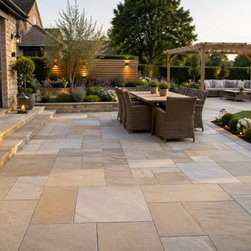


A Practical Guide to Choosing Patio Paving in the UK
A successful patio starts with the right material, but the decision should not be based on colour alone. The paving must also suit the garden conditions, expected use, drainage, maintenance requirements, and installation method.
For many homeowners, the main choice is between natural stone and porcelain. Within natural stone, Indian sandstone paving and limestone paving remain popular, while porcelain paving is often selected for a more controlled and contemporary finish.
A wider range of sizes, colours, and finishes can be compared in the main paving slabs collection at Paving Slabs UK.
Start with the Conditions in the Garden
Before choosing a product, examine the site. A patio beside the house may have different conditions from a path at the rear of the garden. Shade, trees, drainage, and surrounding soil all affect how the paving will look and perform after installation.
A garden with limited sunlight may stay damp for longer and require more regular cleaning. A patio beneath trees may collect leaves, pollen, and organic matter. A surface close to a barbecue or outdoor kitchen may be exposed to grease and food spills.
The right paving material should therefore be chosen according to the real conditions of the garden, not only according to a sample viewed indoors.
Indian Sandstone: Suitable for Natural and Traditional Designs
Indian sandstone is known for natural variation. Each slab can differ in tone, markings, and surface texture, even when the paving comes from the same pack.
This variation works well in traditional gardens, informal patios, and properties with brickwork, planting, or gravel. It can make the finished surface feel less manufactured and more established.
Main Advantages
Main Considerations
Sandstone is porous. It may absorb moisture and show marks from leaves, soil, food, or other organic materials. Shaded areas can also develop algae more quickly than sunny locations.
Natural variation should not be confused with manufacturing inconsistency. Buyers who want every slab to look almost identical may be better suited to porcelain.
Installation should normally include a full mortar bed and proper support beneath the entire slab. Spot bedding can leave hollow areas and may contribute to movement or breakage.
Porcelain Paving: Best for Consistent Layouts
Porcelain paving is often chosen for modern patios where regular sizing, straight joints, and controlled colour are important.
Outdoor porcelain has low water absorption and is generally less likely to take in grease or moisture than porous natural stone. It can therefore be easier to maintain in busy outdoor dining areas.
Main Advantages
Main Considerations
Porcelain is not necessarily easier to install. It normally requires a slurry primer on the underside so that the slab bonds correctly to the mortar bed.
Cutting also requires suitable blades and equipment. Poor tools can chip the edges or corners, particularly on large-format slabs.
The product should be designed for outdoor use and have an appropriate slip-resistant finish. Indoor tiles should not be used as a substitute for external paving.
Limestone Paving: Subtle and Understated
Limestone paving often has a softer and more restrained appearance than strongly varied sandstone. It can suit traditional homes as well as simple contemporary gardens.
Grey, black, and warmer limestone tones can create a calm surface that allows planting, walls, and outdoor furniture to provide more of the visual contrast.
Main Advantages
Main Considerations
Some limestone can change in appearance after exposure to weather. Dark limestone may gradually lighten, particularly after repeated rain, strong sunlight, or unsuitable cleaning.
Acid-based cleaning products should not be used on limestone because they can damage the surface. Cleaning products should always be checked for compatibility before use.
Which Material Is Easiest to Maintain?
Porcelain generally requires less effort to clean because of its low water absorption. However, it is not completely maintenance-free. Dirt can still accumulate in joints, around planters, and beneath outdoor furniture.
Natural stone may require more attention, especially in shaded or damp areas. Both sandstone and limestone can develop organic staining, algae, or weather naturally over time, depending on exposure and maintenance.
Maintenance should be considered based on your garden's conditions rather than the material alone. A sunny porcelain patio may remain cleaner than a shaded sandstone patio, but any surface beneath trees will still collect leaves and debris.
How Slab Size Changes the Finished Patio
Large paving slabs can make a patio appear more spacious by reducing the number of visible joints. A 900 × 600 mm format is a popular choice for medium and large patios, particularly in rectangular layouts.
However, larger slabs are heavier to handle and often require more cutting around curves, steps, drains, and narrow spaces, which can increase material waste.
Smaller slabs or mixed-size packs are often a better choice for traditional gardens or irregular layouts. The ideal slab size is one that fits the available space with the fewest awkward cuts.
Compare the Materials Before Ordering
Material
Appearance
Maintenance
Installation Requirements
Best For
Indian Sandstone
Natural and varied
May require more cleaning in damp areas
Full mortar support and colour mixing
Traditional patios and garden paths
Porcelain Paving
Clean and consistent
Generally easier to clean
Slurry primer and suitable cutting equipment
Modern patios and outdoor dining areas
Limestone Paving
Subtle and understated
Requires non-acidic cleaning products
Full support and careful maintenance
Elegant patios and garden pathways
Installation Is as Important as the Paving
Even the highest-quality paving slabs can fail if they are installed on an inadequate base. The hidden construction beneath the surface determines whether the patio remains level, stable, and properly drained for years to come.
A professional installation should normally include:
Reducing the depth of the sub-base or using spot bedding instead of full mortar support may reduce the initial installation cost, but it can lead to movement, rocking slabs, and failed joints over time.
Drainage Should Be Planned First
A patio should normally be designed so that water drains away from the house. Water should never collect near doorways, air bricks, or the damp-proof course.
Drainage channels may be required where finished levels are restricted. Existing inspection covers and garden drainage should also be considered before excavation begins.
Correcting drainage problems after the patio has been installed can be expensive, so the drainage layout and surface falls should always be planned in advance.
Should Natural Stone Be Sealed?
Sealing can be beneficial for some natural stone patios, particularly those with light-coloured surfaces, smooth finishes, or heavy foot traffic. It may help reduce stain absorption and make routine cleaning easier.
However, sealing is not always essential, and it does not eliminate the need for regular maintenance. The paving must be clean, dry, and suitable for the chosen sealer. Always test the product on a small, hidden area before treating the entire patio.
Porcelain paving generally does not require sealing because of its low water absorption, although the joints may still need occasional maintenance.
How Much Extra Paving Should Be Ordered?
Always order slightly more paving than the exact measured patio area. Extra slabs are useful for cuts, accidental breakages, layout adjustments, and future repairs.
For a simple rectangular patio, allowing 8%–10% extra material is usually sufficient. Larger allowances may be needed for diagonal patterns, curved edges, or complex layouts.
Keeping spare slabs is especially important with natural stone because future batches may differ in colour or texture.
Avoid These Common Mistakes
Final Recommendation
Choose Indian sandstone if you prefer natural variation and a traditional garden appearance.
Choose Porcelain paving if you want consistent dimensions, low water absorption, and a contemporary finish.
Choose Limestone paving if you prefer a subtle and understated natural stone look.
Whichever material you choose, the long-term performance of your patio depends just as much on proper sub-base preparation, full mortar bedding, drainage, and quality jointing as it does on the paving itself.
For many homeowners, the main choice is between natural stone and porcelain. Within natural stone, Indian sandstone paving and limestone paving remain popular, while porcelain paving is often selected for a more controlled and contemporary finish.
A wider range of sizes, colours, and finishes can be compared in the main paving slabs collection at Paving Slabs UK.
Start with the Conditions in the Garden
Before choosing a product, examine the site. A patio beside the house may have different conditions from a path at the rear of the garden. Shade, trees, drainage, and surrounding soil all affect how the paving will look and perform after installation.
A garden with limited sunlight may stay damp for longer and require more regular cleaning. A patio beneath trees may collect leaves, pollen, and organic matter. A surface close to a barbecue or outdoor kitchen may be exposed to grease and food spills.
The right paving material should therefore be chosen according to the real conditions of the garden, not only according to a sample viewed indoors.
Indian Sandstone: Suitable for Natural and Traditional Designs
Indian sandstone is known for natural variation. Each slab can differ in tone, markings, and surface texture, even when the paving comes from the same pack.
This variation works well in traditional gardens, informal patios, and properties with brickwork, planting, or gravel. It can make the finished surface feel less manufactured and more established.
Main Advantages
- Natural colour variation
- Traditional appearance
- Available in regular sizes and mixed-size packs
- Suitable for patios, paths, and garden landscaping
- Works well with brick, timber, and planted borders
Main Considerations
Sandstone is porous. It may absorb moisture and show marks from leaves, soil, food, or other organic materials. Shaded areas can also develop algae more quickly than sunny locations.
Natural variation should not be confused with manufacturing inconsistency. Buyers who want every slab to look almost identical may be better suited to porcelain.
Installation should normally include a full mortar bed and proper support beneath the entire slab. Spot bedding can leave hollow areas and may contribute to movement or breakage.
Porcelain Paving: Best for Consistent Layouts
Porcelain paving is often chosen for modern patios where regular sizing, straight joints, and controlled colour are important.
Outdoor porcelain has low water absorption and is generally less likely to take in grease or moisture than porous natural stone. It can therefore be easier to maintain in busy outdoor dining areas.
Main Advantages
- Consistent dimensions
- Low water absorption
- Clean, modern appearance
- Stone-effect and contemporary finishes
- Suitable for precise layouts
Main Considerations
Porcelain is not necessarily easier to install. It normally requires a slurry primer on the underside so that the slab bonds correctly to the mortar bed.
Cutting also requires suitable blades and equipment. Poor tools can chip the edges or corners, particularly on large-format slabs.
The product should be designed for outdoor use and have an appropriate slip-resistant finish. Indoor tiles should not be used as a substitute for external paving.
Limestone Paving: Subtle and Understated
Limestone paving often has a softer and more restrained appearance than strongly varied sandstone. It can suit traditional homes as well as simple contemporary gardens.
Grey, black, and warmer limestone tones can create a calm surface that allows planting, walls, and outdoor furniture to provide more of the visual contrast.
Main Advantages
- Subtle natural colour
- Suitable for simple garden designs
- Works with both older and newer properties
- Less visually busy than highly varied paving
Main Considerations
Some limestone can change in appearance after exposure to weather. Dark limestone may gradually lighten, particularly after repeated rain, strong sunlight, or unsuitable cleaning.
Acid-based cleaning products should not be used on limestone because they can damage the surface. Cleaning products should always be checked for compatibility before use.
Which Material Is Easiest to Maintain?
Porcelain generally requires less effort to clean because of its low water absorption. However, it is not completely maintenance-free. Dirt can still accumulate in joints, around planters, and beneath outdoor furniture.
Natural stone may require more attention, especially in shaded or damp areas. Both sandstone and limestone can develop organic staining, algae, or weather naturally over time, depending on exposure and maintenance.
Maintenance should be considered based on your garden's conditions rather than the material alone. A sunny porcelain patio may remain cleaner than a shaded sandstone patio, but any surface beneath trees will still collect leaves and debris.
How Slab Size Changes the Finished Patio
Large paving slabs can make a patio appear more spacious by reducing the number of visible joints. A 900 × 600 mm format is a popular choice for medium and large patios, particularly in rectangular layouts.
However, larger slabs are heavier to handle and often require more cutting around curves, steps, drains, and narrow spaces, which can increase material waste.
Smaller slabs or mixed-size packs are often a better choice for traditional gardens or irregular layouts. The ideal slab size is one that fits the available space with the fewest awkward cuts.
Compare the Materials Before Ordering
Material
Appearance
Maintenance
Installation Requirements
Best For
Indian Sandstone
Natural and varied
May require more cleaning in damp areas
Full mortar support and colour mixing
Traditional patios and garden paths
Porcelain Paving
Clean and consistent
Generally easier to clean
Slurry primer and suitable cutting equipment
Modern patios and outdoor dining areas
Limestone Paving
Subtle and understated
Requires non-acidic cleaning products
Full support and careful maintenance
Elegant patios and garden pathways
Installation Is as Important as the Paving
Even the highest-quality paving slabs can fail if they are installed on an inadequate base. The hidden construction beneath the surface determines whether the patio remains level, stable, and properly drained for years to come.
A professional installation should normally include:
- Excavation to a suitable depth
- A compacted sub-base
- A full mortar bed
- Primer where required
- Stable edge restraints
- Correct surface falls for drainage
- Suitable jointing materials
Reducing the depth of the sub-base or using spot bedding instead of full mortar support may reduce the initial installation cost, but it can lead to movement, rocking slabs, and failed joints over time.
Drainage Should Be Planned First
A patio should normally be designed so that water drains away from the house. Water should never collect near doorways, air bricks, or the damp-proof course.
Drainage channels may be required where finished levels are restricted. Existing inspection covers and garden drainage should also be considered before excavation begins.
Correcting drainage problems after the patio has been installed can be expensive, so the drainage layout and surface falls should always be planned in advance.
Should Natural Stone Be Sealed?
Sealing can be beneficial for some natural stone patios, particularly those with light-coloured surfaces, smooth finishes, or heavy foot traffic. It may help reduce stain absorption and make routine cleaning easier.
However, sealing is not always essential, and it does not eliminate the need for regular maintenance. The paving must be clean, dry, and suitable for the chosen sealer. Always test the product on a small, hidden area before treating the entire patio.
Porcelain paving generally does not require sealing because of its low water absorption, although the joints may still need occasional maintenance.
How Much Extra Paving Should Be Ordered?
Always order slightly more paving than the exact measured patio area. Extra slabs are useful for cuts, accidental breakages, layout adjustments, and future repairs.
For a simple rectangular patio, allowing 8%–10% extra material is usually sufficient. Larger allowances may be needed for diagonal patterns, curved edges, or complex layouts.
Keeping spare slabs is especially important with natural stone because future batches may differ in colour or texture.
Avoid These Common Mistakes
- Choosing paving based only on online photographs.
- Ignoring shaded or damp areas in the garden.
- Ordering the exact measured area without allowing for waste.
- Using spot bedding instead of full mortar support.
- Failing to plan drainage before installation.
- Using unsuitable cleaning products on natural stone.
- Assuming porcelain can be installed without a slurry primer.
- Choosing slab sizes that are too large for the available space.
Final Recommendation
Choose Indian sandstone if you prefer natural variation and a traditional garden appearance.
Choose Porcelain paving if you want consistent dimensions, low water absorption, and a contemporary finish.
Choose Limestone paving if you prefer a subtle and understated natural stone look.
Whichever material you choose, the long-term performance of your patio depends just as much on proper sub-base preparation, full mortar bedding, drainage, and quality jointing as it does on the paving itself.
Project Year: 2008
Project Cost: Less than AUD 1,000