

Small Ledges That Make Awkward Wall Space Work Harder
Every home has them. Those narrow strips of wall between a window and a door frame. The sliver above a light switch. The gap beside the stairs that collects nothing but dust and cobwebs. These awkward spaces feel like architectural afterthoughts, but they're actually opportunities hiding in plain sight.
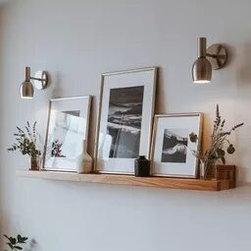
Small ledges and slim shelves are quietly solving storage and styling problems across Australian homes. They don't need much depth, they cost very little to install, and they can transform a dead zone into something genuinely useful.
Why Small Ledges Work Where Traditional Shelving Fails
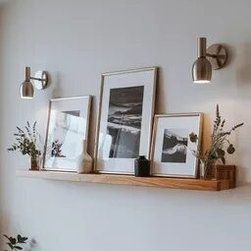
Standard shelves typically run 200mm to 300mm deep. That's fine for a bookcase or pantry, but it overwhelms tight corridors, narrow hallways, and compact bathrooms. A ledge, on the other hand, sits at just 80mm to 120mm deep. Enough to hold a framed photo, a small plant, a set of keys, or a candle. Not enough to block a walkway or make a room feel cluttered.
The proportions matter more than people realise. A slim timber ledge in a hallway adds warmth and personality without stealing a single square centimetre of usable floor space. For renters in Sydney or Melbourne apartments where every millimetre counts, that's a significant win.
The Psychology of Visual Weight
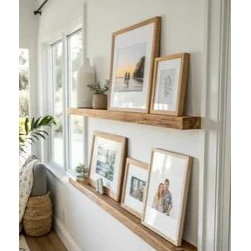
Bulky furniture makes small rooms feel smaller. Ledges do the opposite. They draw the eye along a wall horizontally, creating the illusion of width. Interior stylists have used this trick for years in display homes and shoebox studios alike. A row of three matching ledges at staggered heights can make a 2.4 metre wall feel considered and intentional, rather than bare and forgotten.
Spots You're Probably Overlooking
Most people fixate on the obvious places: above the sofa, beside the bed. But the real magic happens in the spaces nobody thinks about.
Above the radiator or heater: A radiator shelf sits neatly on top of panel heaters and radiators, catching rising heat and redirecting it into the room while providing a display surface. It protects the wall above from heat damage too, which saves on repainting costs down the track.
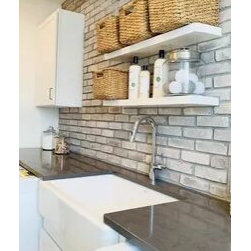
The strip beside the fridge: Often just 100mm wide, this gap is perfect for a vertical run of spice ledges.
Under wall-mounted TVs: A single ledge here replaces a bulky entertainment unit and holds the remote, a speaker, or a small succulent.
Inside the toilet room: That tiny separate loo deserves more than a bare wall. One ledge, one candle, one small print. Done.
Above door frames: Surprisingly effective for displaying small collectibles or trailing plants.
Materials and Finishes That Suit Australian Homes
Timber remains the most popular choice, and for good reason. Tasmanian oak and Victorian ash both offer a light, natural grain that works with the coastal and Scandi-inspired interiors dominating Australian design right now. For something more industrial, powder-coated steel ledges in matte black provide sharp contrast against white walls.
Matching the Existing Palette
The trick is subtlety. A ledge should feel like part of the wall, not an afterthought bolted onto it. Matching the ledge colour to existing skirting boards or window trims creates cohesion. Going one shade darker adds a touch of deliberate contrast without screaming for attention.
Floating ledges with concealed brackets look cleanest. Visible brackets can work in certain styles, particularly rustic or farmhouse aesthetics, but for modern Australian interiors, hidden fixings win every time.
Installation Tips That Save Headaches
Plasterboard walls are standard in most Australian homes built after the 1960s, and they won't hold weight without proper anchoring. Always use wall plugs rated for plasterboard, or better yet, locate a timber stud with a stud finder. For ledges under 500mm long carrying only lightweight items, quality spring toggles rated to 20kg will handle the job.
Height placement is everything. Ledges in hallways work best at 1400mm to 1500mm from the floor, roughly eye level for most adults. In kitchens, go lower, around 1200mm, so items are within easy reach. Above radiators, leave at least 50mm of clearance for airflow.
Getting the Spacing Right
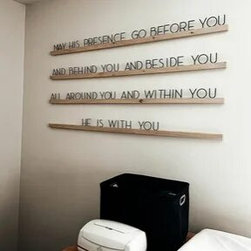
If you're grouping multiple ledges, keep consistent vertical gaps between them. Spacing of 250mm to 350mm between each ledge creates a balanced, gallery-style arrangement. Odd numbers look more natural than even ones. Three ledges always outperform four.
Less Furniture, More Character
Australian homes are getting smaller. The average new apartment in Sydney dropped below 60 square metres in recent years. Big furniture doesn't fit the way it used to, and nobody wants a home that feels like a storage facility. Small ledges offer a quiet rebellion against oversized furnishings. They prove that the smallest interventions often make the biggest difference, turning forgotten wall space into something you actually notice and enjoy.
Small ledges and slim shelves are quietly solving storage and styling problems across Australian homes. They don't need much depth, they cost very little to install, and they can transform a dead zone into something genuinely useful.
Why Small Ledges Work Where Traditional Shelving Fails
Standard shelves typically run 200mm to 300mm deep. That's fine for a bookcase or pantry, but it overwhelms tight corridors, narrow hallways, and compact bathrooms. A ledge, on the other hand, sits at just 80mm to 120mm deep. Enough to hold a framed photo, a small plant, a set of keys, or a candle. Not enough to block a walkway or make a room feel cluttered.
The proportions matter more than people realise. A slim timber ledge in a hallway adds warmth and personality without stealing a single square centimetre of usable floor space. For renters in Sydney or Melbourne apartments where every millimetre counts, that's a significant win.
The Psychology of Visual Weight
Bulky furniture makes small rooms feel smaller. Ledges do the opposite. They draw the eye along a wall horizontally, creating the illusion of width. Interior stylists have used this trick for years in display homes and shoebox studios alike. A row of three matching ledges at staggered heights can make a 2.4 metre wall feel considered and intentional, rather than bare and forgotten.
Spots You're Probably Overlooking
Most people fixate on the obvious places: above the sofa, beside the bed. But the real magic happens in the spaces nobody thinks about.
Above the radiator or heater: A radiator shelf sits neatly on top of panel heaters and radiators, catching rising heat and redirecting it into the room while providing a display surface. It protects the wall above from heat damage too, which saves on repainting costs down the track.
The strip beside the fridge: Often just 100mm wide, this gap is perfect for a vertical run of spice ledges.
Under wall-mounted TVs: A single ledge here replaces a bulky entertainment unit and holds the remote, a speaker, or a small succulent.
Inside the toilet room: That tiny separate loo deserves more than a bare wall. One ledge, one candle, one small print. Done.
Above door frames: Surprisingly effective for displaying small collectibles or trailing plants.
Materials and Finishes That Suit Australian Homes
Timber remains the most popular choice, and for good reason. Tasmanian oak and Victorian ash both offer a light, natural grain that works with the coastal and Scandi-inspired interiors dominating Australian design right now. For something more industrial, powder-coated steel ledges in matte black provide sharp contrast against white walls.
Matching the Existing Palette
The trick is subtlety. A ledge should feel like part of the wall, not an afterthought bolted onto it. Matching the ledge colour to existing skirting boards or window trims creates cohesion. Going one shade darker adds a touch of deliberate contrast without screaming for attention.
Floating ledges with concealed brackets look cleanest. Visible brackets can work in certain styles, particularly rustic or farmhouse aesthetics, but for modern Australian interiors, hidden fixings win every time.
Installation Tips That Save Headaches
Plasterboard walls are standard in most Australian homes built after the 1960s, and they won't hold weight without proper anchoring. Always use wall plugs rated for plasterboard, or better yet, locate a timber stud with a stud finder. For ledges under 500mm long carrying only lightweight items, quality spring toggles rated to 20kg will handle the job.
Height placement is everything. Ledges in hallways work best at 1400mm to 1500mm from the floor, roughly eye level for most adults. In kitchens, go lower, around 1200mm, so items are within easy reach. Above radiators, leave at least 50mm of clearance for airflow.
Getting the Spacing Right
If you're grouping multiple ledges, keep consistent vertical gaps between them. Spacing of 250mm to 350mm between each ledge creates a balanced, gallery-style arrangement. Odd numbers look more natural than even ones. Three ledges always outperform four.
Less Furniture, More Character
Australian homes are getting smaller. The average new apartment in Sydney dropped below 60 square metres in recent years. Big furniture doesn't fit the way it used to, and nobody wants a home that feels like a storage facility. Small ledges offer a quiet rebellion against oversized furnishings. They prove that the smallest interventions often make the biggest difference, turning forgotten wall space into something you actually notice and enjoy.