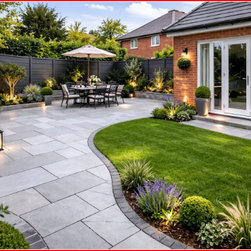


Best Paving Materials for UK Patios: Sandstone, Porcelain or Limestone?
Choosing patio paving is often treated as a design decision, but appearance is only one part of the process. The material must also suit the garden, the way the space will be used, the amount of shade, the expected maintenance, and the installer's ability to prepare the base correctly.
A paving product can look attractive in a showroom and still be unsuitable for a particular site. A pale surface may show barbecue stains, a shaded patio may remain damp for longer, and a large-format slab may create unnecessary cutting in a narrow or irregular garden.
Homeowners comparing materials can start with the paving slabs collection from Paving Slabs UK. The principal choices for many domestic patios are Indian sandstone, porcelain paving, and limestone paving.
What Should a Patio Material Be Judged On?
Price per square metre is important, but it does not show the full cost or likely performance of a patio. A practical comparison should include the following points:
The best material is usually the one whose limitations are acceptable for the project. No paving type removes the need for correct installation or routine care.
Indian Sandstone: Traditional and Naturally Varied
Indian sandstone paving is widely used in British gardens because it creates a natural, established appearance. It is available in grey, buff, brown, and multicolour shades, with visible variation between individual slabs.
This variation is one of sandstone's main characteristics. Some slabs may be lighter or darker, and natural markings can appear across the surface. Buyers who prefer an entirely uniform patio should not expect sandstone to behave like a manufactured tile.
Why Homeowners Choose Sandstone
Points That Need Realistic Expectations
Sandstone is porous. Water, leaves, soil, food, and organic matter can affect the surface if they remain in contact with the stone. Shaded areas may need more frequent cleaning because they dry more slowly.
Installation quality is critical. The slabs should normally be laid on a full mortar bed, with suitable falls and stable joints. Spot bedding may leave unsupported areas beneath the slabs and can contribute to rocking or breakage.
Natural stone should also be mixed from several packs during laying. This prevents similar tones from becoming concentrated in one part of the patio.
Porcelain Paving: Consistent but Technically Demanding
Porcelain paving is often selected where the design requires straight edges, even sizing, and a controlled colour range. It is particularly common in modern gardens and outdoor dining areas.
Because porcelain has very low water absorption, it is generally less likely to absorb stains than porous natural stone. This does not mean it will never need cleaning. Dirt can still collect on the surface, in joints, and around planted areas.
Why Porcelain May Suit a Project
Why Porcelain Installation Needs Care
Porcelain is dense and does not bond to mortar in the same way as porous stone. A suitable slurry primer is normally required on the back of each slab. Without this bond, the slab may separate from the mortar bed.
Cutting also requires appropriate blades and equipment. Corners and edges can chip if the wrong tools are used or the slab is handled carelessly.
The surface must be designed for external use. A polished indoor tile should not be treated as suitable outdoor paving. Slip resistance, drainage, and winter conditions need to be considered before purchase.
Limestone Paving: Calm Colour and Natural Texture
Limestone paving is often chosen where a garden needs natural stone without the stronger colour variation found in some sandstone ranges.
Its appearance can be understated, making it useful in gardens where planting, furniture, or brickwork should remain the main visual features. Grey, black, and warmer limestone shades are commonly used for paths, patios, and seating areas.
Reasons to Consider Limestone
Important Limestone Limitations
Limestone can change in appearance after exposure to weather. Dark limestone, in particular, may become lighter over time. The rate of change depends on the stone, exposure, cleaning methods, and local conditions.
Acid-based cleaners should be avoided because they can damage limestone. Cleaning products should always be checked for compatibility and tested on an inconspicuous area before full application.
Sandstone, Porcelain and Limestone Compared
Feature
Indian sandstone
Porcelain paving
Limestone paving
Appearance
Natural and varied
Controlled and consistent
Subtle and restrained
Water absorption
Porous
Very low
Porous natural stone
Installation
Full mortar support and pack mixing
Slurry primer and specialist cutting
Full support and suitable cleaning products
Maintenance
May need more cleaning in damp areas
Usually easier to clean
Needs non-acidic maintenance
Typical garden style
Traditional and informal
Modern and structured
Traditional or understated contemporary
How Much Does Slab Size Matter?
Slab size affects the appearance, handling, and the amount of cutting required. Large slabs can make a patio look less busy because there are fewer joints, but they are heavier and less convenient to install around obstacles.
A 900 × 600 mm format often suits medium and large rectangular patios. In smaller gardens with several drains, steps, or curved boundaries, smaller paving may reduce cutting waste and make the layout easier to manage.
Before ordering, it is helpful to mark out the patio dimensions and calculate where the main joints will fall. Narrow strips beside walls or doors can often be avoided by adjusting the starting position or selecting a different slab size.
Why the Base Matters More Than the Surface Price
The visible paving is only the top layer of the patio. The stability of the finished surface depends on the preparation underneath.
A typical domestic patio usually requires:
Reducing excavation depth or skipping proper compaction may reduce the initial cost, but it greatly increases the risk of settlement, movement, and failed joints. Even premium paving cannot compensate for a poorly prepared foundation.
Drainage Should Be Decided Before Installation
The patio should normally direct water away from the building. The finished level must also account for door thresholds, damp-proof courses, air bricks, and inspection covers.
Where space is limited, drainage channels may be necessary. Water should never be directed toward neighbouring properties or allowed to collect against the house.
Proper falls should be formed during the base and bedding stages rather than being corrected only at the surface. Once paving has been installed, fixing poor drainage often requires significant rebuilding.
Maintenance Depends on the Location
The same paving material may require different levels of maintenance depending on the location. A sunny patio dries quickly after rainfall, while a shaded area beneath trees may remain damp and collect leaves.
Basic patio maintenance includes:
Pressure washing should be carried out carefully because excessive pressure can damage joints and some natural stone surfaces. Sealing natural stone may help in certain situations, but it does not eliminate the need for routine maintenance or solve drainage problems.
Can a Patio Be Installed as a DIY Project?
Small and simple paving projects may be suitable for experienced DIY enthusiasts, but larger patios require far more than simply placing slabs on the ground.
The work often involves excavation, moving aggregate, compacting the base, mixing mortar, cutting heavy slabs, creating correct drainage falls, and finishing the joints. Porcelain paving also requires proper slurry priming and specialist cutting equipment.
A common mistake is underestimating the amount of physical work and precision involved. Poor levels or inadequate support may not be obvious immediately but often become noticeable after repeated rainfall and seasonal ground movement.
Allow for Waste and Future Repairs
The quantity ordered should always be slightly greater than the exact patio area. Extra slabs are needed for cuts, accidental breakage, layout adjustments, and future repairs.
An allowance of around 8% to 10% is usually suitable for a straightforward rectangular patio. More may be required for diagonal layouts, irregular shapes, or patios with multiple obstacles.
Keeping a few spare slabs is especially useful with natural stone because replacement batches may vary in colour and texture.
Which Material Is the Best Choice?
There is no single material that is perfect for every project.
Indian sandstone is an excellent choice for homeowners who prefer natural variation and traditional character. Porcelain paving is ideal for projects requiring consistent sizing, low water absorption, and a contemporary appearance. Limestone paving suits gardens where a more subtle and understated natural stone finish is preferred.
The final decision should consider your property's style, garden conditions, maintenance expectations, installation requirements, and overall budget. The cheapest slab is not always the most economical choice once installation and long-term performance are taken into account.
For more colours, finishes, and sizes, browse the paving slabs collection available from Paving Slabs UK.
A paving product can look attractive in a showroom and still be unsuitable for a particular site. A pale surface may show barbecue stains, a shaded patio may remain damp for longer, and a large-format slab may create unnecessary cutting in a narrow or irregular garden.
Homeowners comparing materials can start with the paving slabs collection from Paving Slabs UK. The principal choices for many domestic patios are Indian sandstone, porcelain paving, and limestone paving.
What Should a Patio Material Be Judged On?
Price per square metre is important, but it does not show the full cost or likely performance of a patio. A practical comparison should include the following points:
- Surface texture and slip resistance
- Colour variation between slabs
- Porosity and staining risk
- Slab thickness and weight
- Cutting and handling requirements
- Bedding, priming, and jointing method
- Expected cleaning and maintenance
- Suitability for the property and garden design
The best material is usually the one whose limitations are acceptable for the project. No paving type removes the need for correct installation or routine care.
Indian Sandstone: Traditional and Naturally Varied
Indian sandstone paving is widely used in British gardens because it creates a natural, established appearance. It is available in grey, buff, brown, and multicolour shades, with visible variation between individual slabs.
This variation is one of sandstone's main characteristics. Some slabs may be lighter or darker, and natural markings can appear across the surface. Buyers who prefer an entirely uniform patio should not expect sandstone to behave like a manufactured tile.
Why Homeowners Choose Sandstone
- Natural colours suit brick houses and planted gardens.
- Riven surfaces create a traditional appearance.
- Regular sizes and mixed-size packs are widely available.
- It can be used for patios, paths, and general garden landscaping.
Points That Need Realistic Expectations
Sandstone is porous. Water, leaves, soil, food, and organic matter can affect the surface if they remain in contact with the stone. Shaded areas may need more frequent cleaning because they dry more slowly.
Installation quality is critical. The slabs should normally be laid on a full mortar bed, with suitable falls and stable joints. Spot bedding may leave unsupported areas beneath the slabs and can contribute to rocking or breakage.
Natural stone should also be mixed from several packs during laying. This prevents similar tones from becoming concentrated in one part of the patio.
Porcelain Paving: Consistent but Technically Demanding
Porcelain paving is often selected where the design requires straight edges, even sizing, and a controlled colour range. It is particularly common in modern gardens and outdoor dining areas.
Because porcelain has very low water absorption, it is generally less likely to absorb stains than porous natural stone. This does not mean it will never need cleaning. Dirt can still collect on the surface, in joints, and around planted areas.
Why Porcelain May Suit a Project
- Consistent slab dimensions.
- Low water absorption.
- Stone-effect and contemporary finishes.
- Suitable for regular layouts and narrow joints.
- Generally straightforward routine cleaning.
Why Porcelain Installation Needs Care
Porcelain is dense and does not bond to mortar in the same way as porous stone. A suitable slurry primer is normally required on the back of each slab. Without this bond, the slab may separate from the mortar bed.
Cutting also requires appropriate blades and equipment. Corners and edges can chip if the wrong tools are used or the slab is handled carelessly.
The surface must be designed for external use. A polished indoor tile should not be treated as suitable outdoor paving. Slip resistance, drainage, and winter conditions need to be considered before purchase.
Limestone Paving: Calm Colour and Natural Texture
Limestone paving is often chosen where a garden needs natural stone without the stronger colour variation found in some sandstone ranges.
Its appearance can be understated, making it useful in gardens where planting, furniture, or brickwork should remain the main visual features. Grey, black, and warmer limestone shades are commonly used for paths, patios, and seating areas.
Reasons to Consider Limestone
- Subtle and relatively restrained colour.
- Suitable for both older and newer properties.
- Natural stone appearance without excessive pattern variation.
- Works well in simple rectangular layouts.
Important Limestone Limitations
Limestone can change in appearance after exposure to weather. Dark limestone, in particular, may become lighter over time. The rate of change depends on the stone, exposure, cleaning methods, and local conditions.
Acid-based cleaners should be avoided because they can damage limestone. Cleaning products should always be checked for compatibility and tested on an inconspicuous area before full application.
Sandstone, Porcelain and Limestone Compared
Feature
Indian sandstone
Porcelain paving
Limestone paving
Appearance
Natural and varied
Controlled and consistent
Subtle and restrained
Water absorption
Porous
Very low
Porous natural stone
Installation
Full mortar support and pack mixing
Slurry primer and specialist cutting
Full support and suitable cleaning products
Maintenance
May need more cleaning in damp areas
Usually easier to clean
Needs non-acidic maintenance
Typical garden style
Traditional and informal
Modern and structured
Traditional or understated contemporary
How Much Does Slab Size Matter?
Slab size affects the appearance, handling, and the amount of cutting required. Large slabs can make a patio look less busy because there are fewer joints, but they are heavier and less convenient to install around obstacles.
A 900 × 600 mm format often suits medium and large rectangular patios. In smaller gardens with several drains, steps, or curved boundaries, smaller paving may reduce cutting waste and make the layout easier to manage.
Before ordering, it is helpful to mark out the patio dimensions and calculate where the main joints will fall. Narrow strips beside walls or doors can often be avoided by adjusting the starting position or selecting a different slab size.
Why the Base Matters More Than the Surface Price
The visible paving is only the top layer of the patio. The stability of the finished surface depends on the preparation underneath.
A typical domestic patio usually requires:
- Excavation to suitable ground
- A properly compacted sub-base
- A full mortar bed
- Primer where the material requires it
- Stable edge restraints
- Correct surface falls
- Appropriate jointing material
Reducing excavation depth or skipping proper compaction may reduce the initial cost, but it greatly increases the risk of settlement, movement, and failed joints. Even premium paving cannot compensate for a poorly prepared foundation.
Drainage Should Be Decided Before Installation
The patio should normally direct water away from the building. The finished level must also account for door thresholds, damp-proof courses, air bricks, and inspection covers.
Where space is limited, drainage channels may be necessary. Water should never be directed toward neighbouring properties or allowed to collect against the house.
Proper falls should be formed during the base and bedding stages rather than being corrected only at the surface. Once paving has been installed, fixing poor drainage often requires significant rebuilding.
Maintenance Depends on the Location
The same paving material may require different levels of maintenance depending on the location. A sunny patio dries quickly after rainfall, while a shaded area beneath trees may remain damp and collect leaves.
Basic patio maintenance includes:
- Regular sweeping
- Prompt removal of food and oil stains
- Cleaning algae when necessary
- Checking joints and edges
- Using suitable cleaning products for the material
Pressure washing should be carried out carefully because excessive pressure can damage joints and some natural stone surfaces. Sealing natural stone may help in certain situations, but it does not eliminate the need for routine maintenance or solve drainage problems.
Can a Patio Be Installed as a DIY Project?
Small and simple paving projects may be suitable for experienced DIY enthusiasts, but larger patios require far more than simply placing slabs on the ground.
The work often involves excavation, moving aggregate, compacting the base, mixing mortar, cutting heavy slabs, creating correct drainage falls, and finishing the joints. Porcelain paving also requires proper slurry priming and specialist cutting equipment.
A common mistake is underestimating the amount of physical work and precision involved. Poor levels or inadequate support may not be obvious immediately but often become noticeable after repeated rainfall and seasonal ground movement.
Allow for Waste and Future Repairs
The quantity ordered should always be slightly greater than the exact patio area. Extra slabs are needed for cuts, accidental breakage, layout adjustments, and future repairs.
An allowance of around 8% to 10% is usually suitable for a straightforward rectangular patio. More may be required for diagonal layouts, irregular shapes, or patios with multiple obstacles.
Keeping a few spare slabs is especially useful with natural stone because replacement batches may vary in colour and texture.
Which Material Is the Best Choice?
There is no single material that is perfect for every project.
Indian sandstone is an excellent choice for homeowners who prefer natural variation and traditional character. Porcelain paving is ideal for projects requiring consistent sizing, low water absorption, and a contemporary appearance. Limestone paving suits gardens where a more subtle and understated natural stone finish is preferred.
The final decision should consider your property's style, garden conditions, maintenance expectations, installation requirements, and overall budget. The cheapest slab is not always the most economical choice once installation and long-term performance are taken into account.
For more colours, finishes, and sizes, browse the paving slabs collection available from Paving Slabs UK.
Project Year: 2009
Project Cost: Less than AUD 1,000