

TOP Home Renovation Trends Shaping UK Houses in 2026
Homeowners are staying put. Not because they love every square metre of what they have. More because moving has become genuinely painful. Stamp duty, agent fees, mortgage rates that make your eyes water. So people are fixing what they have instead. A growing number of owners, younger ones especially, have quietly decided that renovation beats relocation. This piece covers what that looks like on the ground in 2026, room by room, trend by trend.
Why 2026 Renovations Feel Different
The priorities have shifted. How a home performs is becoming just as important as how it looks. People want rooms that actually work, heating bills that don't sting in February, and tradespeople who show up when they say they will.
That last bit has its own solution, actually. Trade businesses now run on platforms built around handyman service call software that keep scheduling tight and stop jobs from falling through the cracks — which means fewer no-shows and faster turnaround on quotes. Small operational shift, real difference for homeowners trying to get work done.
What's also changed is the timeframe people are thinking in. This isn't about staging a home for sale in two years. Owners are choosing upgrades built to last a decade or more — materials that hold up, systems that pay back, layouts that suit how life actually runs. So what are they spending on? Here's what 2026 looks like.
Kitchens: People Are Going Into the Walls Now
Kitchens are always top of the list. But the why has changed.
Among homeowners who renovated their kitchen recently, 71% changed the layout entirely, and 63% upgraded the plumbing and electrics at the same time. That's not a cosmetic refresh. That's proper work.
The style direction is shifting toward Japandi — spare, warm, handleless. Less shiny, more considered. Visible grain in oak, integrated appliances, matte surfaces. And the spending mindset has changed too:
People are buying kitchens to last fifteen years, not five. That changes what they choose and how much they're willing to spend.
Dedicated Rooms: Closing the Door on Open-Plan Living
Open-plan had a good run. But working from home, schooling kids, and cooking dinner in the same undivided space highlighted an obvious problem — sometimes you just need a door.
Houzz data shows searches for craft rooms are up 69%, with notable increases for home cinema and music studio searches too. People want a room that's for something specific. A room with a purpose.
What's feeding this:
Multi-generational living is part of it. Remote work is part of it. Mostly it's just the realisation that a well-divided home functions better than a barn.
Energy Upgrades: Not a Nice-to-Have Anymore
A significant portion of UK homes are poorly insulated, expensive to heat, and sitting well below the energy performance ratings the government wants to see within the next decade. That's not a distant problem — it's the current state of most streets in most towns.
Heat pump installations have been climbing year on year, driven partly by government grant schemes that take a sizeable chunk off the upfront cost. The technology has matured enough that for a well-insulated home, the running economics actually make sense. Not for every property yet. But the direction of travel is clear.
The sensible order of operations: insulation first, heating system second. Loft insulation and wall insulation cut bills meaningfully on their own — and they make everything that comes after work better. Get the order wrong and the heat pump underperforms from day one.
Solar panels are appearing on more rooftops too, often paired with battery storage to smooth out the supply. Still a minority of homes, but the curve has been steep for several years now and shows no sign of flattening.
Bathrooms: Small Rooms, Serious Investment
Bathroom renovations have moved well past replacing the tiles and calling it done. The direction is calm over flashy — underfloor heating, rainfall showers, natural stone, freestanding baths where the room is big enough. Not necessarily hotel-grade, but considered. The kind of bathroom that doesn't look like it came flat-packed from a catalogue.
Space efficiency runs underneath all of it. British bathrooms are often small, and people are stacking functions where they can — laundry tucked in alongside the shower, storage built into every available wall. Smart, if not exactly glamorous. Searches for combined bathroom-laundry spaces have been trending noticeably upward, which says everything about the size of the average UK bathroom.
Outdoor Spaces: The Unofficial Extra Room
British weather hasn't improved. Outdoor renovation spending has. Funny how that works.
The shift is away from a deck and some garden chairs toward genuinely extending the house outward. Covered pergolas with proper weatherproof roofing. Bifold doors that fold completely out of sight. Outdoor kitchen setups with preparation surfaces, integrated lighting, and somewhere to actually wash things — not a portable gas BBQ dragged out twice in August.
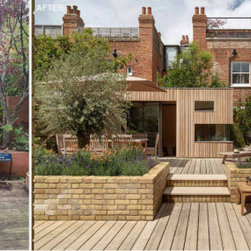
The indoor-outdoor connection is a strong theme across 2026 renovations generally. Slim door frames, cleaner sightlines, materials that carry through from inside to outside. The goal is a home that feels bigger than it is, which in the UK property market is basically everyone's goal.
Garden landscaping also offers one of the better returns on investment among home improvements — often comparable to kitchens, and without the three weeks of eating takeaway.
The Bigger Picture
Look across all of it and a pattern emerges. UK homeowners in 2026 aren't renovating to impress. They're renovating because the house needs to work — warmer in winter, quieter when it needs to be, smarter about energy, less wasteful with space.
Acoustic panels over feature walls. Dedicated workrooms over open-plan ambiguity. Proper insulation before anything decorative. Understairs storage over statement design choices nobody actually uses.
Unglamorous? A bit. But these are the renovations that still feel like good decisions five years from now and that's exactly the calculation most homeowners are making.
Why 2026 Renovations Feel Different
The priorities have shifted. How a home performs is becoming just as important as how it looks. People want rooms that actually work, heating bills that don't sting in February, and tradespeople who show up when they say they will.
That last bit has its own solution, actually. Trade businesses now run on platforms built around handyman service call software that keep scheduling tight and stop jobs from falling through the cracks — which means fewer no-shows and faster turnaround on quotes. Small operational shift, real difference for homeowners trying to get work done.
What's also changed is the timeframe people are thinking in. This isn't about staging a home for sale in two years. Owners are choosing upgrades built to last a decade or more — materials that hold up, systems that pay back, layouts that suit how life actually runs. So what are they spending on? Here's what 2026 looks like.
Kitchens: People Are Going Into the Walls Now
Kitchens are always top of the list. But the why has changed.
Among homeowners who renovated their kitchen recently, 71% changed the layout entirely, and 63% upgraded the plumbing and electrics at the same time. That's not a cosmetic refresh. That's proper work.
The style direction is shifting toward Japandi — spare, warm, handleless. Less shiny, more considered. Visible grain in oak, integrated appliances, matte surfaces. And the spending mindset has changed too:
- 65% of homeowners now prioritise materials based on look and feel, 44% on durability — and only 24% cite cost as a primary factor, down seven percentage points from last year.
- Contemporary and modern finishes still dominate, but Japandi is climbing steadily as an emerging style category.
- Median kitchen renovation spend sits at £12,000, with 94% of renovating homeowners hiring professional help.
People are buying kitchens to last fifteen years, not five. That changes what they choose and how much they're willing to spend.
Dedicated Rooms: Closing the Door on Open-Plan Living
Open-plan had a good run. But working from home, schooling kids, and cooking dinner in the same undivided space highlighted an obvious problem — sometimes you just need a door.
Houzz data shows searches for craft rooms are up 69%, with notable increases for home cinema and music studio searches too. People want a room that's for something specific. A room with a purpose.
What's feeding this:
- Loft conversions and garage transformations into dedicated hobby or work rooms
- Internal layout changes that break up open floors into distinct zones
- Acoustic panel searches up 625% — soundproofing is no longer just for recording studios
- Understairs storage searches up 43% — that awkward triangular void is finally getting sorted
Multi-generational living is part of it. Remote work is part of it. Mostly it's just the realisation that a well-divided home functions better than a barn.
Energy Upgrades: Not a Nice-to-Have Anymore
A significant portion of UK homes are poorly insulated, expensive to heat, and sitting well below the energy performance ratings the government wants to see within the next decade. That's not a distant problem — it's the current state of most streets in most towns.
Heat pump installations have been climbing year on year, driven partly by government grant schemes that take a sizeable chunk off the upfront cost. The technology has matured enough that for a well-insulated home, the running economics actually make sense. Not for every property yet. But the direction of travel is clear.
The sensible order of operations: insulation first, heating system second. Loft insulation and wall insulation cut bills meaningfully on their own — and they make everything that comes after work better. Get the order wrong and the heat pump underperforms from day one.
Solar panels are appearing on more rooftops too, often paired with battery storage to smooth out the supply. Still a minority of homes, but the curve has been steep for several years now and shows no sign of flattening.
Bathrooms: Small Rooms, Serious Investment
Bathroom renovations have moved well past replacing the tiles and calling it done. The direction is calm over flashy — underfloor heating, rainfall showers, natural stone, freestanding baths where the room is big enough. Not necessarily hotel-grade, but considered. The kind of bathroom that doesn't look like it came flat-packed from a catalogue.
Space efficiency runs underneath all of it. British bathrooms are often small, and people are stacking functions where they can — laundry tucked in alongside the shower, storage built into every available wall. Smart, if not exactly glamorous. Searches for combined bathroom-laundry spaces have been trending noticeably upward, which says everything about the size of the average UK bathroom.
Outdoor Spaces: The Unofficial Extra Room
British weather hasn't improved. Outdoor renovation spending has. Funny how that works.
The shift is away from a deck and some garden chairs toward genuinely extending the house outward. Covered pergolas with proper weatherproof roofing. Bifold doors that fold completely out of sight. Outdoor kitchen setups with preparation surfaces, integrated lighting, and somewhere to actually wash things — not a portable gas BBQ dragged out twice in August.
The indoor-outdoor connection is a strong theme across 2026 renovations generally. Slim door frames, cleaner sightlines, materials that carry through from inside to outside. The goal is a home that feels bigger than it is, which in the UK property market is basically everyone's goal.
Garden landscaping also offers one of the better returns on investment among home improvements — often comparable to kitchens, and without the three weeks of eating takeaway.
The Bigger Picture
Look across all of it and a pattern emerges. UK homeowners in 2026 aren't renovating to impress. They're renovating because the house needs to work — warmer in winter, quieter when it needs to be, smarter about energy, less wasteful with space.
Acoustic panels over feature walls. Dedicated workrooms over open-plan ambiguity. Proper insulation before anything decorative. Understairs storage over statement design choices nobody actually uses.
Unglamorous? A bit. But these are the renovations that still feel like good decisions five years from now and that's exactly the calculation most homeowners are making.